
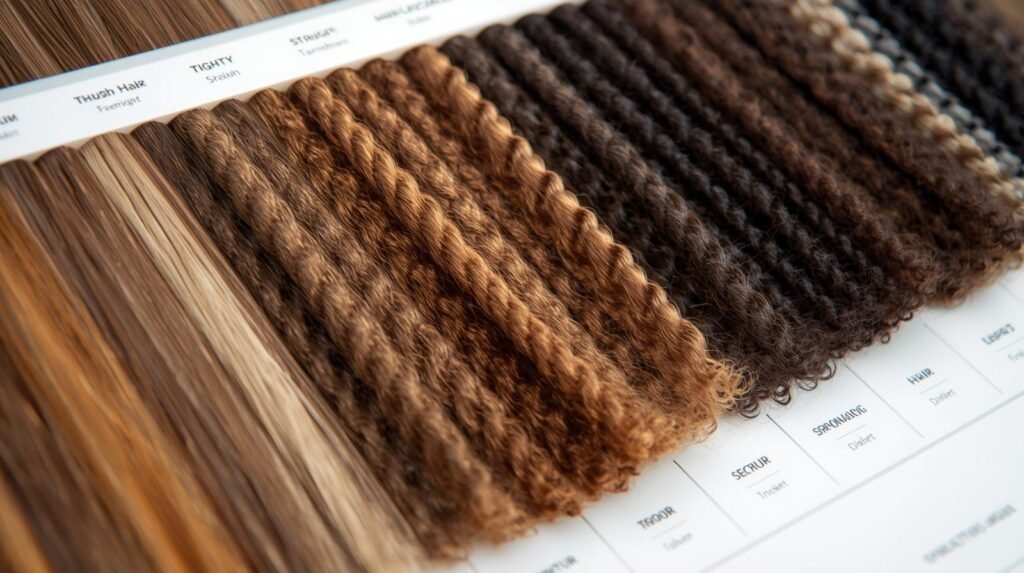

Ever wonder why a hairstyle looks amazing on someone else but never quite works on you? The answer often comes down to hair texture. A hair texture chart is one of the easiest and most reliable tools for understanding how your hair naturally behaves—and what it actually needs to thrive.
In this guide, we’ll break down the hair texture chart in plain, human language. Whether you’re exploring a natural hair texture chart, searching for a curly hair texture chart, or curious about charts specific to men, babies, or Black hair, this article has you covered.
What Is a Hair Texture Chart?
A hair texture chart is a visual system used to categorize based on its natural pattern, thickness, and curl shape. It helps identify whether hair is straight, wavy, curly, or coily—and how tight or loose that pattern is.
Hair texture charts are commonly used by:
-
Hairstylists and barbers
-
People starting a natural hair journey
-
Anyone choosing products or hairstyles
Knowing your texture saves time, money, and frustration.
The Standard Hair Texture Chart (Types 1–4)
Most hair texture charts follow the Andre Walker Hair Typing System, which divides hair into four main categories with subtypes.
Type 1: Straight Hair
Found often in a Caucasian hair texture chart, but not exclusive to it.
-
1A: Very straight, fine, no volume
-
1B: Straight with slight body
-
1C: Straight but thick or coarse
Straight hair reflects light well but can get oily quickly.
Type 2: Wavy Hair
A loose “S” pattern that sits between straight and curly.
-
2A: Slight waves, easy to style
-
2B: More defined waves, some frizz
-
2C: Thick waves, almost curly
Wavy hair benefits from lightweight moisture and frizz control.
Type 3: Curly Hair
This is where a curly hair chart becomes especially helpful.
-
3A: Loose, shiny curls
-
3B: Springy ringlets
-
3C: Tight corkscrews
Curly hair needs hydration and gentle handling to keep definition.
Type 4: Coily / Kinky Hair
Often highlighted in a black hair chart or hair texture chart black hair.
-
4A: Soft coils with visible pattern
-
4B: Z-shaped bends
-
4C: Tight coils with minimal curl definition
This hair type is delicate and thrives with moisture-rich routines.
Natural Hair Texture Chart Explained
A natural hair texture chart focuses on hair in its untreated state—no relaxers, no heat damage, no chemical processing.
Why this matters:
-
It shows your true curl or coil pattern
-
Helps choose the right protective styles
-
Prevents using products that fight your texture
Natural texture charts are especially useful for long-term hair health.
Black Hair Texture Chart vs General Hair Charts
A black hair hair texture chart often expands on Type 4 textures in more detail. This is important because coily hair can vary dramatically in density, shrinkage, and porosity.
Key differences include:
-
Higher focus on moisture retention
-
More styling versatility (twists, locs, braids)
-
Emphasis on protective care
These charts are designed with cultural and biological realities in mind.
Hair Texture Chart for Men
A hair chart men version focuses less on length and more on how hair behaves when cut short.
Men use texture charts to:
-
Choose fades, tapers, and fringe styles
-
Decide between clippers or scissors
-
Understand how beards and hair textures align
Texture matters just as much as face shape when choosing a haircut.
Caucasian Hair Texture Chart Overview
A Caucasian texture chart typically features more Type 1 and Type 2 patterns, but this isn’t universal.
Important note:
-
Caucasian hair can be curly or coily
-
Texture is about pattern, not ethnicity
These charts are best used as guides—not rigid labels.
Baby Hair Texture Chart: Why It’s Different
A baby hair chart is more observational than definitive.
Baby hair:
-
Often changes within the first 2–3 years
-
May appear straight but later curl
-
Should not be over-styled or labeled early
Use baby charts gently, mainly to guide care—not predictions.
How to Identify Your Hair Using a Hair Texture Chart
Follow these steps for accurate results:
-
Wash your hair and let it air-dry
-
Don’t use products or heat
-
Observe the natural pattern
-
Compare it to a hair chart
Repeat this every few months, especially if your routine changes.
Why Knowing Your Hair Texture Matters
Understanding your texture helps you:
-
Choose the right products
-
Prevent breakage and dryness
-
Pick hairstyles that actually work
In short, the hair chart removes guesswork.
FAQs About Hair Texture Charts
What is the most accurate hair chart?
The Andre Walker system is the most widely accepted, but it works best when combined with porosity and density knowledge.
Can one person have multiple hair textures?
Yes. Many people have mixed textures across their scalp.
Is a black hair chart different from others?
It often goes deeper into Type 4 variations, which need specialized care.
Does hair texture change over time?
Yes. Hormones, age, damage, and health can all affect texture.
Can men use the same hair chart?
Absolutely. Texture applies regardless of gender.
Conclusion
A hair texture chart is more than a diagram—it’s a roadmap to healthier, happier hair. Whether you’re exploring a natural hair texture chart, comparing patterns on a curly hair chart, or learning through a black hair chart, understanding your texture changes everything.