

Introduction
Have you ever wondered why some countries have many children while others have very few? Or why populations grow fast in some places but shrink in others? The answers lie in a helpful tool called the demographic transition model. This model shows how countries change over time. It looks at birth rates and death rates. These two things decide if a population grows or shrinks.
The demographic transition model was created many years ago. Scientists studied how countries in Europe changed. They noticed a pattern. When countries become modern, their people start having fewer babies. They also stop dying so young. This pattern happens again and again. It is like a roadmap for countries. The demographic transition model helps us guess what might happen next in different places.
Think of it like growing up. A baby grows into a child, then a teen, then an adult. Countries grow and change too. The demographic transition model tracks these changes. It has different stages. Each stage looks different. Each stage brings new challenges and wins. By learning this model, you can understand news better. You can see why some places build many schools while others build more nursing homes. Let’s explore this together in a way that makes sense.
What Is the Demographic Transition Model? A Simple Answer
The demographic transition model is a tool that shows how populations change over time. It tracks two main things: how many babies are born and how many people die. These two numbers tell us a lot about a country. When birth rates are high and death rates are also high, the population stays about the same. When birth rates stay high but death rates drop, the population grows fast. This is what happens in many developing countries today.
The demographic transition model has been around since the early 1900s. A man named Warren Thompson created it. He looked at data from many countries. He saw that all countries seemed to follow the same path. First, they were poor with many dying young. Then, they got better at keeping people alive. Later, families chose to have fewer children. This pattern became the model we use today.
When students ask what is the demographic transition model, teachers often say it is a story. It tells the story of how a country moves from poor and traditional to rich and modern. The story has different chapters. We call these chapters stages. Each stage has its own look and feel. By understanding these stages, we can help countries plan for their future. We can guess what problems might come next. This makes the demographic transition model very useful for governments and planners.
The Demographic Transition Model Definition AP Human Geography
In AP Human Geography class, students must learn this model well. The demographic transition model definition AP human geography focuses on how populations change with development. Teachers want students to see the link between society and numbers. It is not just about counting people. It is about understanding why people make the choices they do.
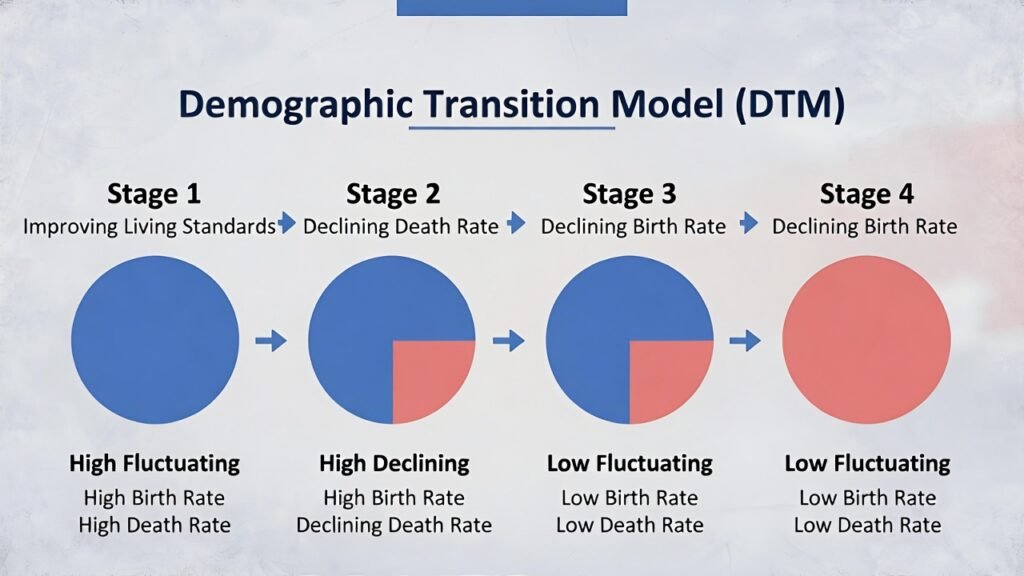
The demographic transition model definition AP human geography includes five main stages. Each stage connects to a country’s level of development. Stage one countries are pre-industrial. They have no modern medicine or farming. Stage two countries start to industrialize. They get clean water and basic healthcare. Stage three countries become more urban. People move to cities for work. Stage four countries are fully developed. They have low birth and death rates. Some experts now add a stage five where populations shrink.
For the exam, the demographic transition model ap human geography questions often ask about real examples. You might need to say which stage a country is in. You might explain why birth rates drop in stage three. The key is to remember that this model is a pattern, not a rule. Every country is different. But the pattern helps us see the big picture. It shows how wealth, education, and healthcare change family size.
The 5 Demographic Transition Model Stages Explained
Stage One: High Fluctuating
The first stage is the oldest way of life. Both birth rates and death rates are very high. They go up and down like a roller coaster. Why are birth rates high? Families need many children to help on farms. Also, many children die young. Parents have extra kids just in case. Death rates are high because of disease and hunger. There is no modern medicine. Food can run out. Life is hard and short.
In stage one, the population stays small. It does not grow much. Sometimes it shrinks if a bad disease comes through. Today, no country is in stage one. But long ago, all countries were here. Think about Europe 500 years ago. Or think about native tribes before meeting modern people. Life expectancy was maybe 30 or 40 years. Most people did not live to see their grandchildren grow up. The demographic transition model starts here because this was the normal way for most of human history.
Stage Two: Early Expanding
Stage two is when things start to change. Death rates drop quickly. This is the most important change. Why do fewer people die? Clean water comes to towns. Sewers take away waste. Medicine improves. Vaccines stop deadly diseases. Food becomes more steady. People stop dying from simple problems. But birth rates stay high. Families still have many babies because that is what they always did.
This creates a population explosion. Many more babies live. But families keep having the same number of kids. So the population grows very fast. This stage happened in Europe during the Industrial Revolution. It is happening now in many poor countries. Places in Africa and parts of Asia are in stage two today. The demographic transition model shows this as a time of rapid growth. Countries in stage two have many young people. They need many schools and jobs for these young people when they grow up.
Stage Three: Late Expanding
Stage three brings another big change. Now birth rates start to drop. Death rates stay low. Why do families choose to have fewer children? Life changes. People move to cities. On a farm, kids help with work. In a city, kids cost money for school and food. Also, more children live to be adults. Parents do not need extra kids just in case. Women get more education and jobs. They marry later and have babies later.
The population still grows in stage three. But it grows slower than in stage two. Why does it still grow? Because many young people from stage two are now having their own kids. Even with smaller families, there are many parents. This is called population momentum. Countries like India and Mexico are in stage three. The demographic transition model shows that growth slows down here. Families get smaller. People start thinking about quality of life, not just having many children.
Stage Four: Low Fluctuating
Stage four is where rich countries live today. Both birth rates and death rates are low. They stay steady most years. Birth rates might go up or down a little. But big changes do not happen. Families have one, two, or three children. Most children grow up healthy. People live long lives into their 70s and 80s. The population stays about the same size. It might grow a tiny bit each year.
In stage four, countries face new problems. They have many old people. They need more nursing homes and doctors for the elderly. They have fewer young workers. This can slow the economy. The demographic transition model shows the United States, Canada, and most of Europe in stage four. Japan is also in stage four. These countries have good healthcare and education. Women have careers. Families are small by choice, not because children die. Life is comfortable for most people.
Stage Five: Declining? The New Debate
Some experts add a fifth stage. In stage five, birth rates fall below death rates. This means the population starts to shrink. Why does this happen? People delay marriage. Some choose not to have kids at all. Life gets busy and expensive. Having children feels hard to fit in. Countries like Japan, Italy, and Germany see this happening. Their populations are getting smaller each year.
Stage five brings big challenges. Who will work in the future? Who will take care of all the old people? Countries try to fix this by letting more immigrants come. Immigrants are often young and have more babies. This can balance things out. But immigration brings its own challenges. The demographic transition model is still growing. Stage five shows that the story is not over. Countries keep changing. We do not know yet what stage six might look like. Maybe someday families will grow again. Or maybe small families are the new normal forever.
Why Birth Rates and Death Rates Matter in This Model
The whole demographic transition model rests on two simple numbers: how many babies are born and how many people die. These numbers seem simple. But they tell a deep story about a country. Birth rates show how families think about the future. High birth rates mean people see children as wealth. Low birth rates mean people see children as a choice. Death rates show how safe and healthy a place is. High death rates mean danger and disease. Low death rates mean safety and good medicine.
When you put these two numbers together, you get population growth. If more babies are born than people dying, the population grows. If fewer babies are born than people dying, the population shrinks. The demographic transition model tracks this balance over time. It shows how the balance shifts as countries develop. In stage one, birth and death cancel each other out. In stage two, births win big. In stage three, births start to lose ground. In stage four, they balance again. In stage five, deaths might win.
These changes do not happen by accident. They happen because of real things in people’s lives. When a country builds hospitals, death rates drop. When girls go to school, birth rates drop later. When cities grow, families get smaller. The demographic transition model connects all these dots. It shows that development and population go hand in hand. You cannot understand one without the other.
Real Country Examples for Each Stage
Let’s look at real places so the demographic transition model comes alive. For stage two, think about Niger in Africa. This country has very high birth rates. Each woman has around six or seven babies. Death rates are dropping but still high compared to rich countries. The population is growing very fast. Niger has many young children. Schools are crowded. Jobs are hard to find. This is stage two in action.
For stage three, look at India. India used to have huge families. Now families are getting smaller. In cities, most couples have two or three children. In villages, families are still larger. But the trend is clear: smaller families are spreading. India still grows because so many young people exist. But the growth is slowing down. The demographic transition model helps us see where India is going next.
For stage four, look at the United States. American families average about 1.7 children per woman. This is below the replacement level of 2.1. But the population still grows a little because of immigration. Death rates are low. People live long lives. The population is stable with a slight increase. This is classic stage four.
For stage five, look at Japan. Japan has very few babies. The average woman has only 1.3 children. Many old people die each year. The population shrinks every year. Schools are closing because there are no children. Stores close in small towns. The demographic transition model shows Japan as a warning and a lesson. Rich countries must think about what happens when families get too small.
How the Demographic Transition Model Helps Us Plan for the Future
Governments love the demographic transition model. It helps them guess what people will need in the future. If you know a country is in stage two, you know you need many schools. Those millions of children will need desks and teachers. If you wait until they are teenagers, it is too late. You must build schools now. The same goes for jobs. Stage two countries need to create jobs for all those young people when they grow up.
In stage four countries, planners think differently. They know they will have many old people. They build hospitals for heart disease and memory care. They train doctors who understand old people. They build houses that are easy for seniors to live in. They also think about pensions. Who will pay for all the retired people? The demographic transition model gives them a head start. They see the future coming.
Businesses also use this model. A toy company wants to sell in stage two countries where many babies are born. A company that sells adult diapers wants to sell in stage four countries with many old people. The demographic transition model tells them where to put their money. It is like a crystal ball for population trends. It is not perfect. But it is the best tool we have.
Limitations: What the Model Doesn’t Tell Us
The demographic transition model is helpful, but it has limits. It was made based on Europe’s history. Europe got rich slowly over 200 years. Today’s poor countries are trying to get rich faster. Can they follow the same path? Maybe not. Some countries get stuck in stage two. They cannot lower birth rates. They stay poor with many children. The model does not explain why some countries get stuck.
The model also ignores migration. People move between countries. This changes populations a lot. A country in stage four might grow because immigrants come. A country in stage two might shrink if many people leave. The demographic transition model only looks at births and deaths. It forgets that people pack up and move. In today’s world, migration matters more than ever.
Culture also matters. The model assumes that all families will want fewer children when they get rich. But some cultures love big families. Religious beliefs can keep birth rates high. The demographic transition model does not account for this. It treats all countries the same. We must remember this when using the model. It is a guide, not a guarantee. Every country writes its own story.
Demographic Transition Model Definition: Key Terms to Know
To really understand this topic, you need some key words. First is birth rate. This is the number of babies born for every 1,000 people in a year. Second is death rate. This is the number of people who die for every 1,000 people. Third is natural increase. This is birth rate minus death rate. It tells you if the population grows from within. The demographic transition model tracks all these numbers over time.
Another term is replacement level. This is about 2.1 children per woman. At this rate, a country replaces itself without growing or shrinking. In stage four, countries are near this level. In stage five, they fall below it. Then the population shrinks unless immigrants come. The demographic transition model helps us see if countries are above or below replacement.
Life expectancy is also important. This is how long people live on average. In stage one, life expectancy was maybe 30 or 35. In stage four, it is often 80 or more. This huge jump changes everything. When people live long, they need retirement money. They need healthcare for many years. The demographic transition model connects to all these real-life details.
How COVID-19 Affected the Demographic Transition Model
The COVID-19 pandemic shook up population trends. In rich stage four countries, death rates went up for a couple years. Old people died from the virus. This was unusual because death rates are usually so steady. Birth rates also changed. Some people had fewer babies because they were scared. Others had more babies because they were stuck at home. The demographic transition model had to adjust for these bumps.
In poorer stage two countries, the effect was different. Many could not get vaccines. The virus spread fast. Health systems broke down. Death rates jumped higher than normal. But birth rates stayed high. The demographic transition model shows that big events like pandemics can shake up the normal pattern. But usually, things go back to the trend after a few years.
The pandemic taught us that the demographic transition model is not set in stone. Surprises happen. A new virus, a war, or a economic crash can change everything. The model is a guide for normal times. It does not predict disasters. But even with the bumps, the overall path remains the same. Countries still move through stages. They just might take a detour sometimes.
Personal Thoughts: Why This Model Matters to You
You might wonder why you should care about the demographic transition model. Here is why: it affects your daily life. If you live in a stage four country, you will likely live a long time. You need to save money for retirement. You might have fewer cousins and siblings. Your family might be small. You might struggle to find a spouse if many people your age are single. These are real things that come from population patterns.
If you travel to stage two countries, you will see the difference. Children everywhere. Busy streets. Loud families. The energy is different. The demographic transition model helps you understand what you see. It explains why your friend from India has so many cousins. It explains why your European friend has only one sibling. Populations shape our lives in ways we do not even notice.
I find the demographic transition model fascinating because it connects big trends to small moments. A woman deciding to have one child instead of three changes the whole country’s future. Millions of those small choices add up. The model shows the result of all those personal decisions. It is economics, sociology, and history all wrapped in one. I hope you see now why this model matters for everyone, not just students.
Frequently Asked Questions
What is the demographic transition model in simple words?
The demographic transition model is a tool that shows how countries change from having high birth and death rates to having low birth and death rates. It has five stages that explain population growth over time.
How many stages are in the demographic transition model?
Most versions have four main stages. Some experts add a fifth stage where populations shrink. The five stages are: high stationary, early expanding, late expanding, low stationary, and declining.
Why is the demographic transition model important?
This model helps governments and businesses plan for the future. It shows whether a country will need more schools for children or more nursing homes for elderly people. It guides important decisions about resources.
What countries are in stage 2 of the demographic transition model?
Many countries in Africa are in stage 2, including Niger, Mali, and Somalia. Parts of Asia like Afghanistan are also in stage 2. These countries have high birth rates and falling death rates.
Is the United States in stage 4?
Yes, the United States is in stage 4 of the demographic transition model. Birth rates and death rates are both low. The population grows slowly, mostly from immigration rather than from many babies being born.
Can countries move backward in the demographic transition model?
Moving backward is rare but possible. War, disease, or economic collapse can raise death rates. However, birth rates usually stay low once people are used to small families. Most countries only move forward through the stages.
Conclusion
The demographic transition model gives us a window into how human populations grow and change. We have walked through all five stages together. We saw how death rates fall first when life gets safer. Then birth rates follow when life gets more modern. This simple pattern explains so much about our world. It tells us why some countries are young and others are old. It helps us guess what might come next.